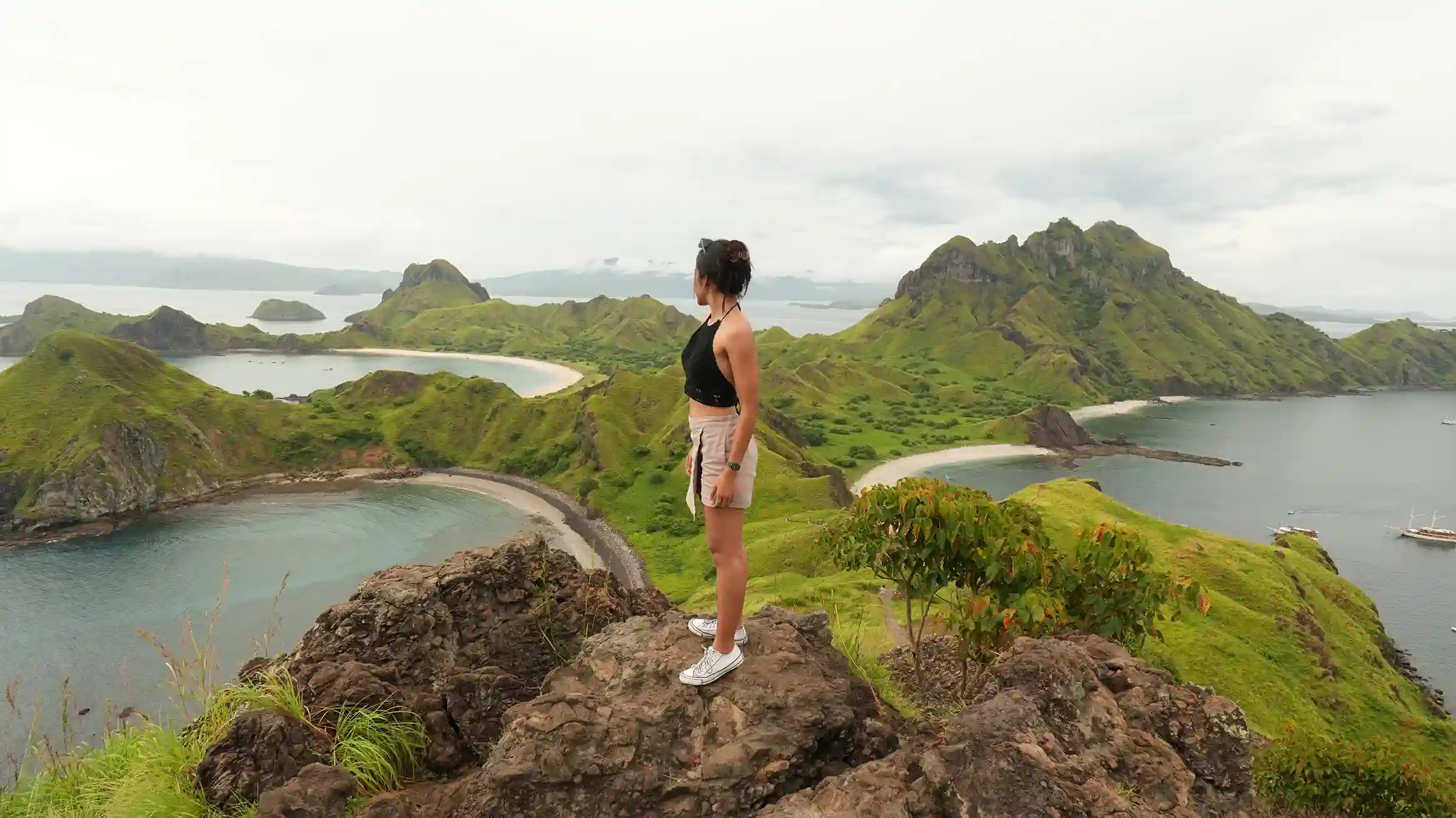
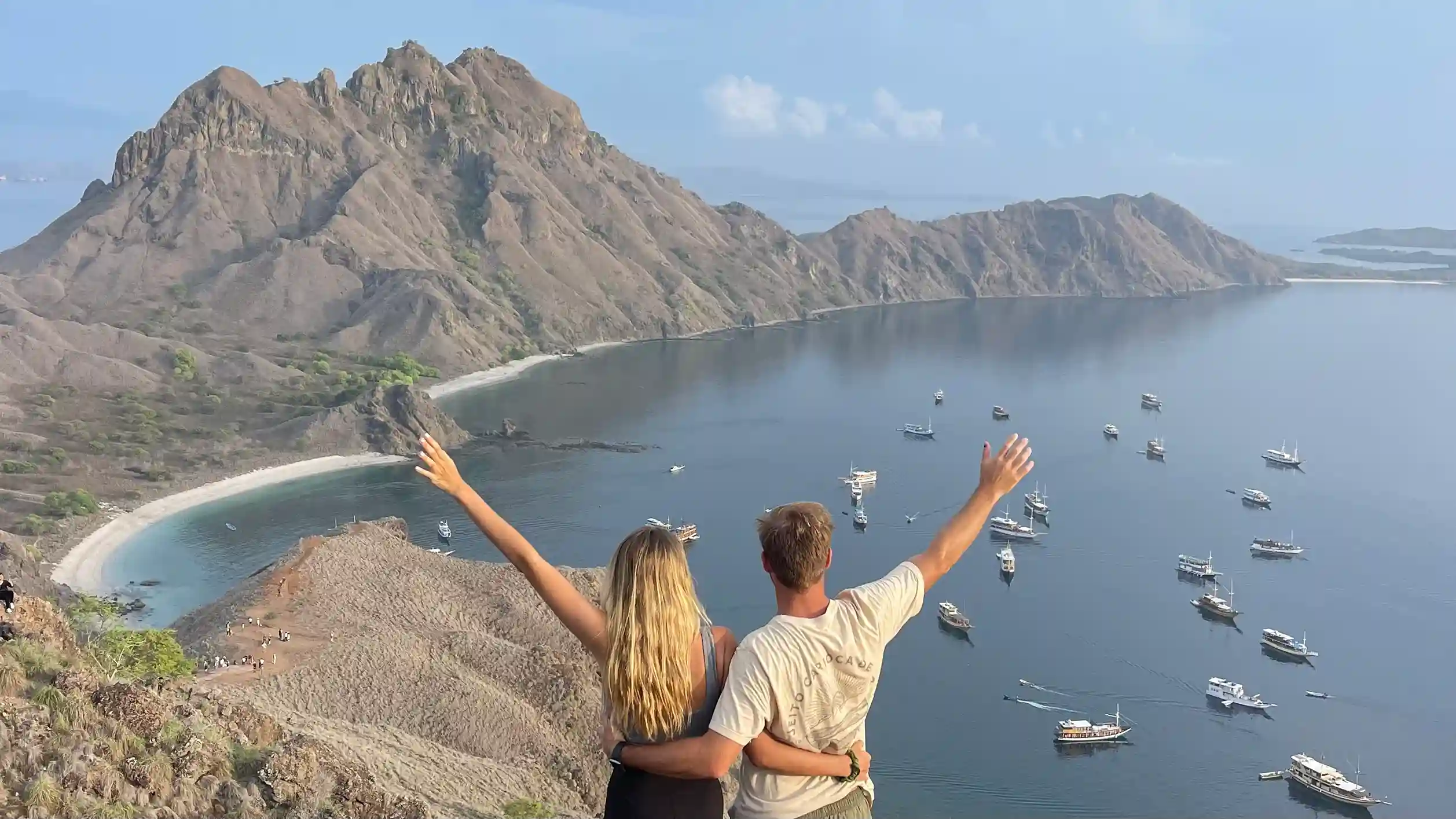
If you have seen one photograph of Komodo National Park, it was almost certainly taken from the Padar viewpoint. Three bays curve away from a single ridgeline, one floored with white sand, one with charcoal-grey, one with a faint pink blush. No other vantage point in the park explains its geography so cleanly, which is why nearly every itinerary, from the cheapest shared speedboat to the most polished phinisi charter, builds its day around this climb.
The climb itself
Padar’s viewpoint trail is a staircase now, not a scramble. Several hundred concrete and timber steps switchback from the jetty beach to the main viewing platform, with two lower platforms on the way up for catching your breath and your photos. A reasonably fit adult reaches the top in 30 to 45 minutes. Children manage it routinely. So do travelers in their seventies who pace themselves.
There is no shade worth mentioning. The hillside is savanna grass, gold in the dry season and briefly green from January to March, and the sun hits it without mercy from mid-morning. This is the single most important fact for planning: climb early or climb late. Boats that put you on the trail at 6:30am give you cool air, soft light, and the island substantially to yourself. By 10am in high season the staircase resembles a queue.
What you actually see
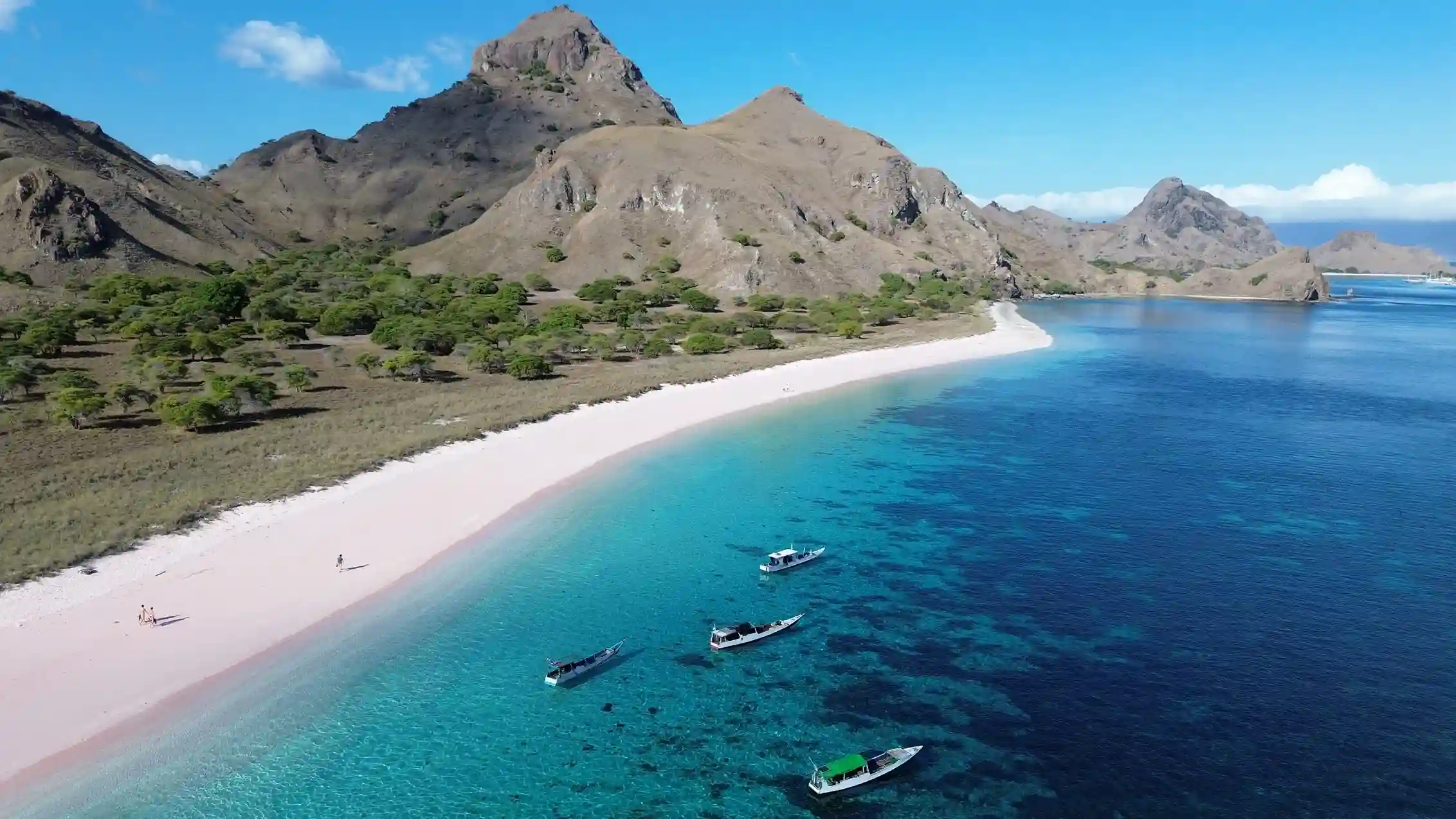
From the main platform the ridgeline drops away on both sides, and the three bays fan out below. The color difference between them is real, not a filter artifact. The southern beach carries a pink tint from fragments of red foraminifera shell mixed into the sand, the same organism responsible for the park’s famous Pink Beach. The grey bay gets its tone from darker volcanic sediment. Beyond the bays, on a clear day, you can pick out Komodo Island to the west and Rinca to the east.
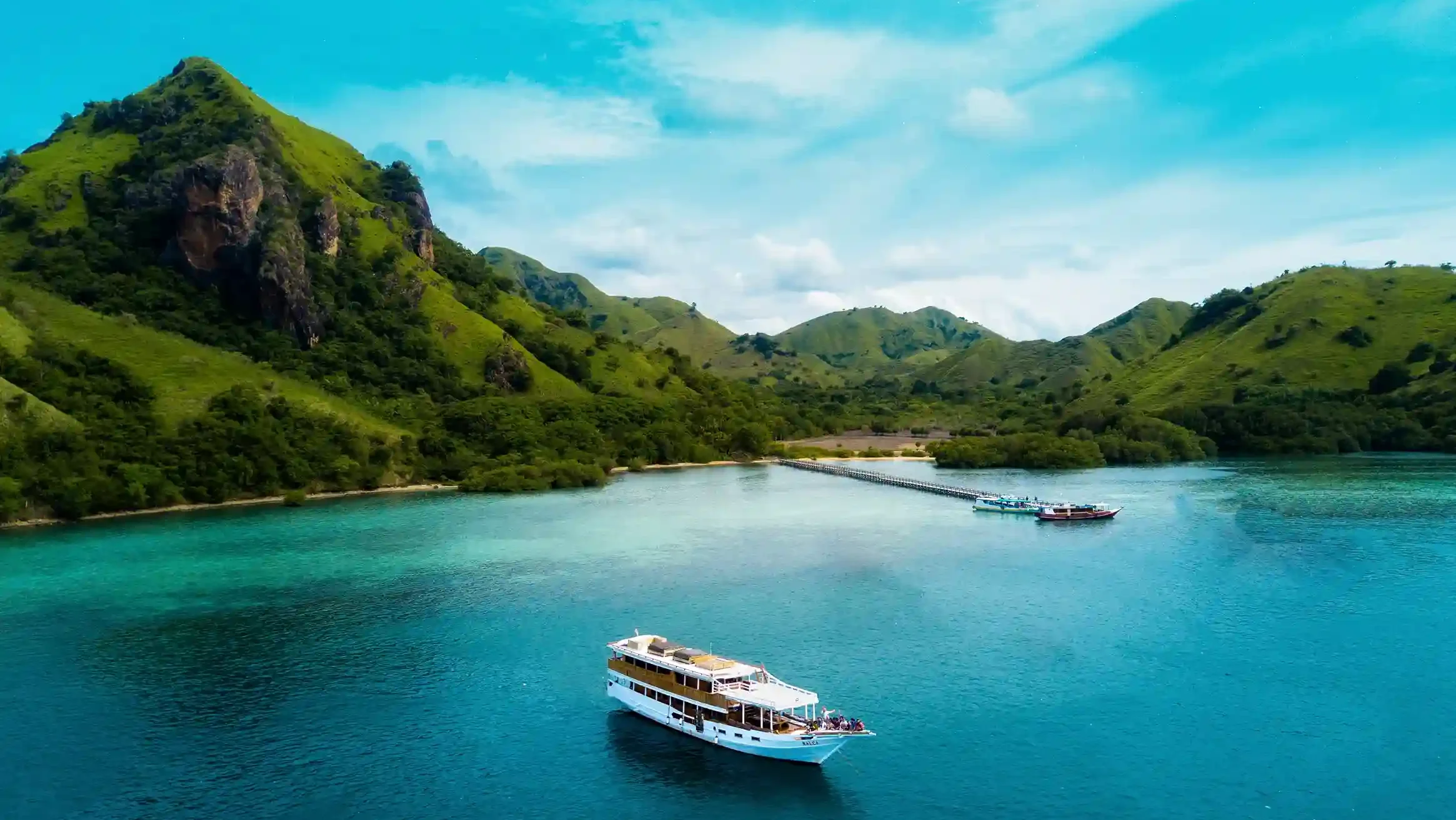
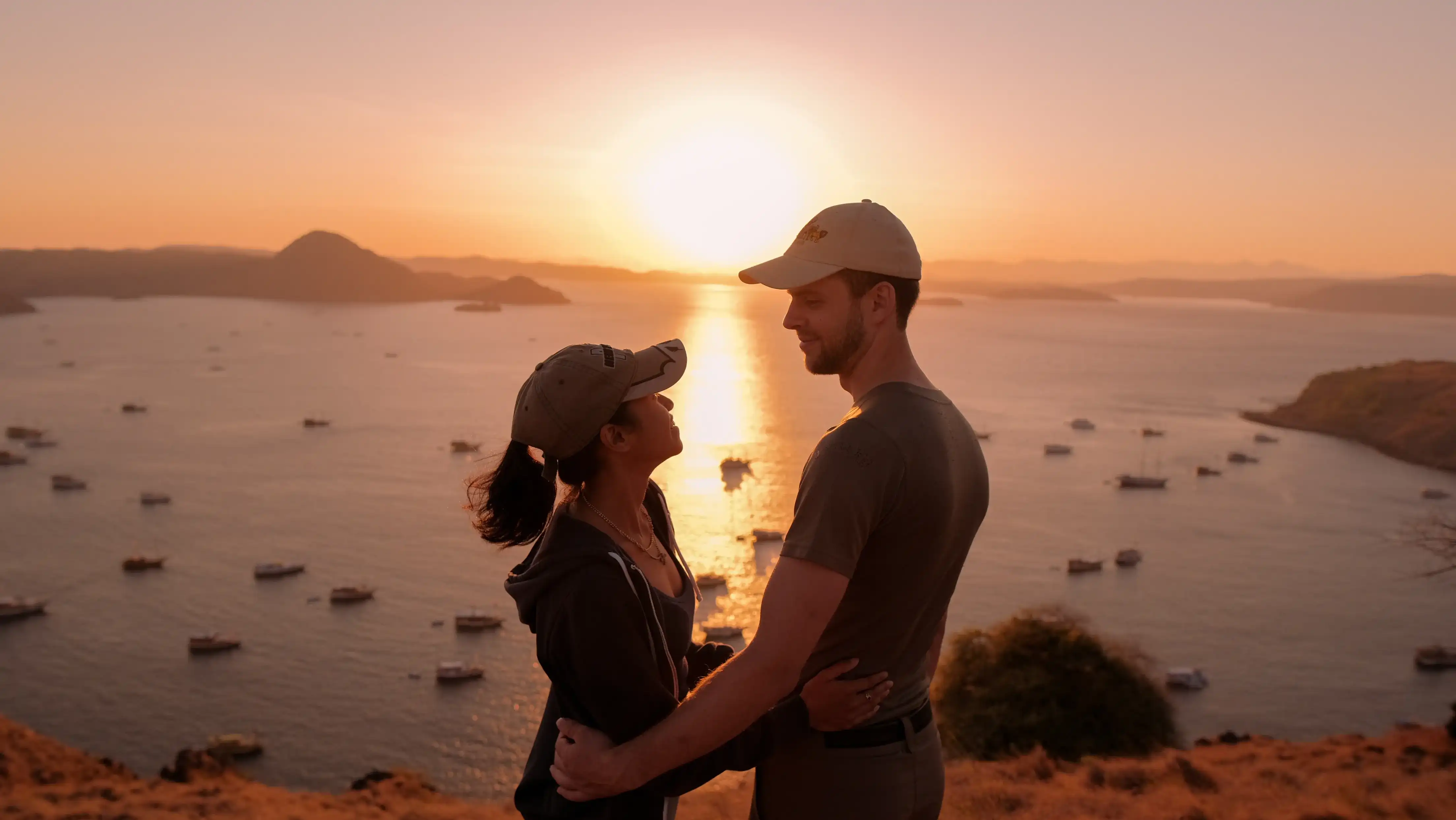
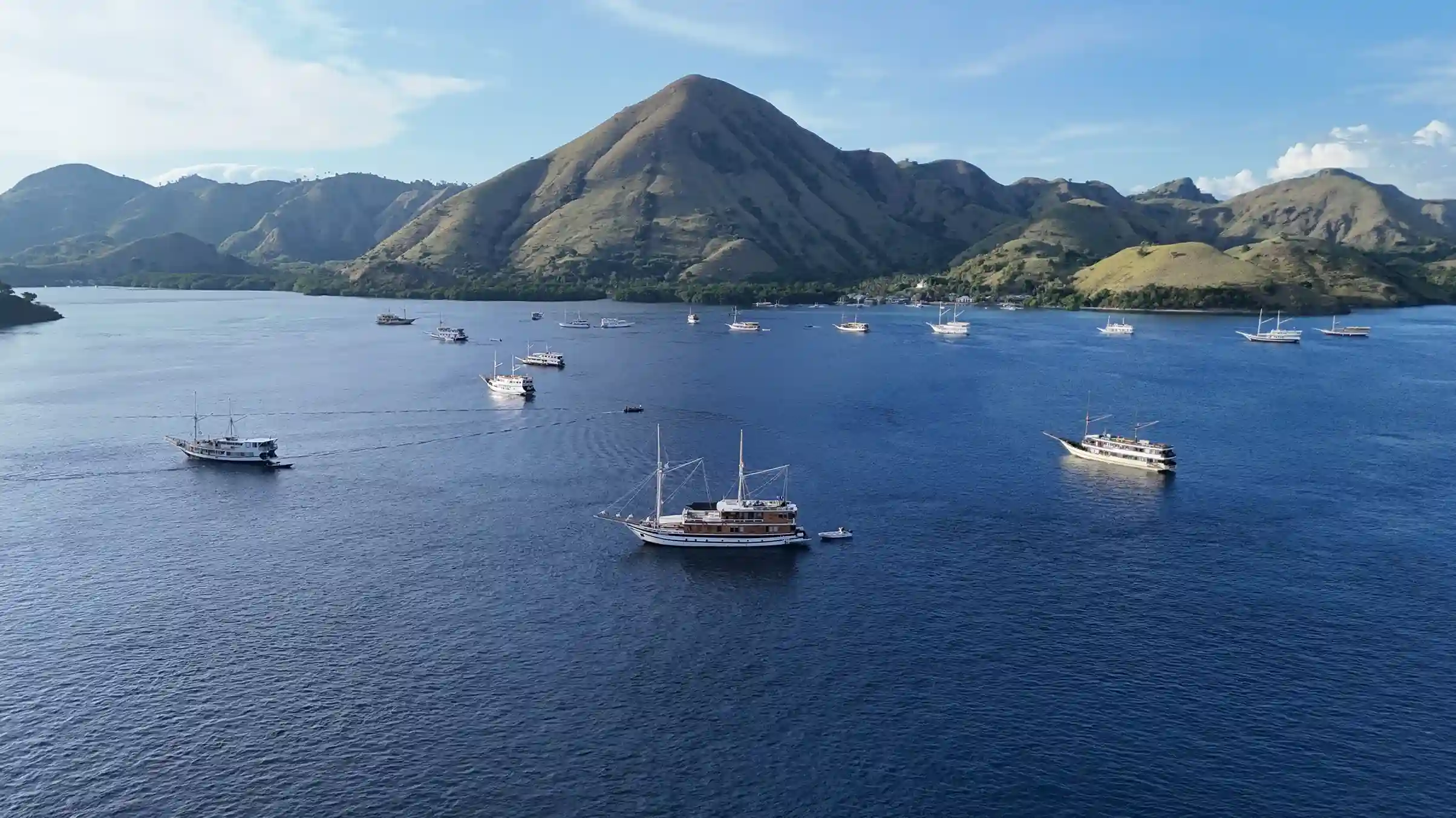
Sunrise climbs reward you twice: the light itself, and the silhouettes of phinisi schooners anchored in the northern bay below, which is where overnight boats moor.
Fees and rules
Padar sits inside Komodo National Park, so your park entry ticket must cover the day you visit. There is a small additional trekking fee, typically IDR 30,000–50,000, collected at the foot of the trail. Unlike Komodo and Rinca, Padar has no resident dragon population, so no ranger escort is required for the standard viewpoint trail — one reason it is often the first stop of the day, before the ranger stations open. The full fee picture is broken down in our park fees and permits guide.
Stay on the staircase. The grass slopes either side are eroding badly where shortcut paths have formed, and rangers have started enforcing the boundary. Drones require a permit arranged in advance, not negotiated on the beach.
When Padar disappoints, and how to avoid it
Three things sour the experience for some visitors. Heat: a midday climb in October can be brutal, and most of the unhappy reviews you will read were written by people who climbed at noon. Crowds: July and August mornings between 8 and 10 concentrate dozens of boats into one staircase. Haze: late dry season, September into November, can flatten the view with dust and burn haze, softening those crisp color boundaries between the bays.
All three have the same solution. Travel in the shoulder months, April to June if you can, and insist on an itinerary that puts Padar first, at dawn. Operators will tell you the order does not matter. It matters more than anything else in the day. Our guide to the best time for a Komodo escape covers the seasonal trade-offs in detail.
Fitting Padar into a route
On the standard day-trip loop, Padar is stop two after Kelor Island, followed by Pink Beach and the dragon walk. On overnight itineraries, good captains anchor in Padar’s north bay the evening before and send you up for sunrise, which is the single best argument for choosing a cruise over a day trip. The stop-by-stop route guide shows where the island fits in the full sequence.
What to bring
- Real shoes or grippy sandals — the steps are uneven in places and the dust is slick going down
- A liter of water per person; there is nothing for sale past the jetty
- Hat and sunscreen even for a 7am climb, because you will descend in full sun
- Cash for the trekking fee if your operator has not prepaid it
Padar takes ninety minutes of your day, jetty to jetty. Of everything on a Komodo escape, it is the stop people remember, and the one worth reorganizing your whole morning around.
Beyond the main viewpoint
Most visitors climb to the main platform, photograph the three bays, and descend — which is the right call on a packed day-trip schedule. With more time, two extensions reward the effort. The ridge continues past the main platform toward Padar’s southern summit, an unpaved track that adds forty minutes round trip and subtracts roughly all of the crowd; the bays read even better from the higher angle, and the anchorage panorama opens to the west. And the white-sand bay below the viewpoint, on the island’s north side, is a legitimate swim stop in its own right — overnight boats often anchor there and send guests in for a dusk swim after the staircase empties.
Photographers should know the light logic: sunrise backlights the eastern bay and rakes texture across the ridgelines, while late afternoon throws the warm light the postcard shots use. Midday flattens everything. A polarizing filter earns its place in the bag here more than anywhere else in the park, deepening the three different blues that make the famous frame work. Tripods are allowed; drones, as noted, are not without a permit. Build Padar into your dates with the seasonal guide, and see how the climb pairs with the rest of the day in the 3-day itinerary.