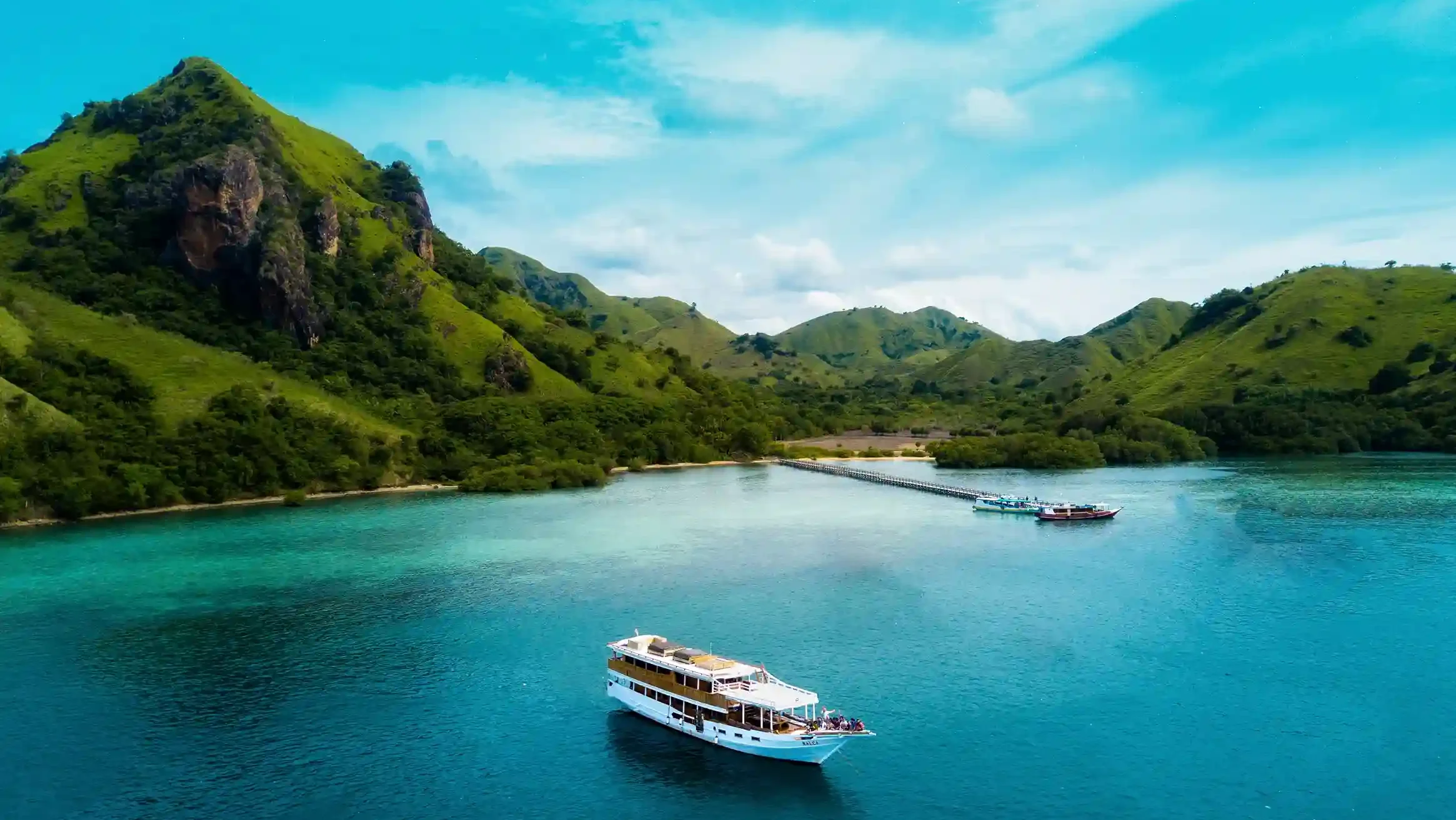
Almost every speedboat that leaves Labuan Bajo at dawn is running a version of the same loop. Operators give it different names and shuffle a stop here or there, but the skeleton is fixed by geography: the islands sit in a rough arc, and there is one sensible way to thread them in daylight. Knowing the route stop by stop lets you compare quotes intelligently and spot the corners a cheap operator plans to cut.
Departure: Labuan Bajo, 5:30–6:30am
Boats leave the harbor early for two reasons. The sea is calmest before mid-morning, and the first stops are the ones worth doing before the heat. A serious operator has you on the water by 6am; a lazy one collects you at 7:30 and you pay for it at every stop for the rest of the day. Crossing time to the park boundary is about an hour on a modern twin-engine speedboat.
Stop 1: Kelor Island
A small cone of an island with a short, steep dirt climb — ten sweaty minutes to a ridgeline view over turquoise shallows. It is the warm-up act for Padar and a fine swim stop. Some boats skip Kelor to save time; on balance it earns its forty-five minutes, and the snorkeling off its sandbar is gentle enough for kids.
Stop 2: Padar viewpoint
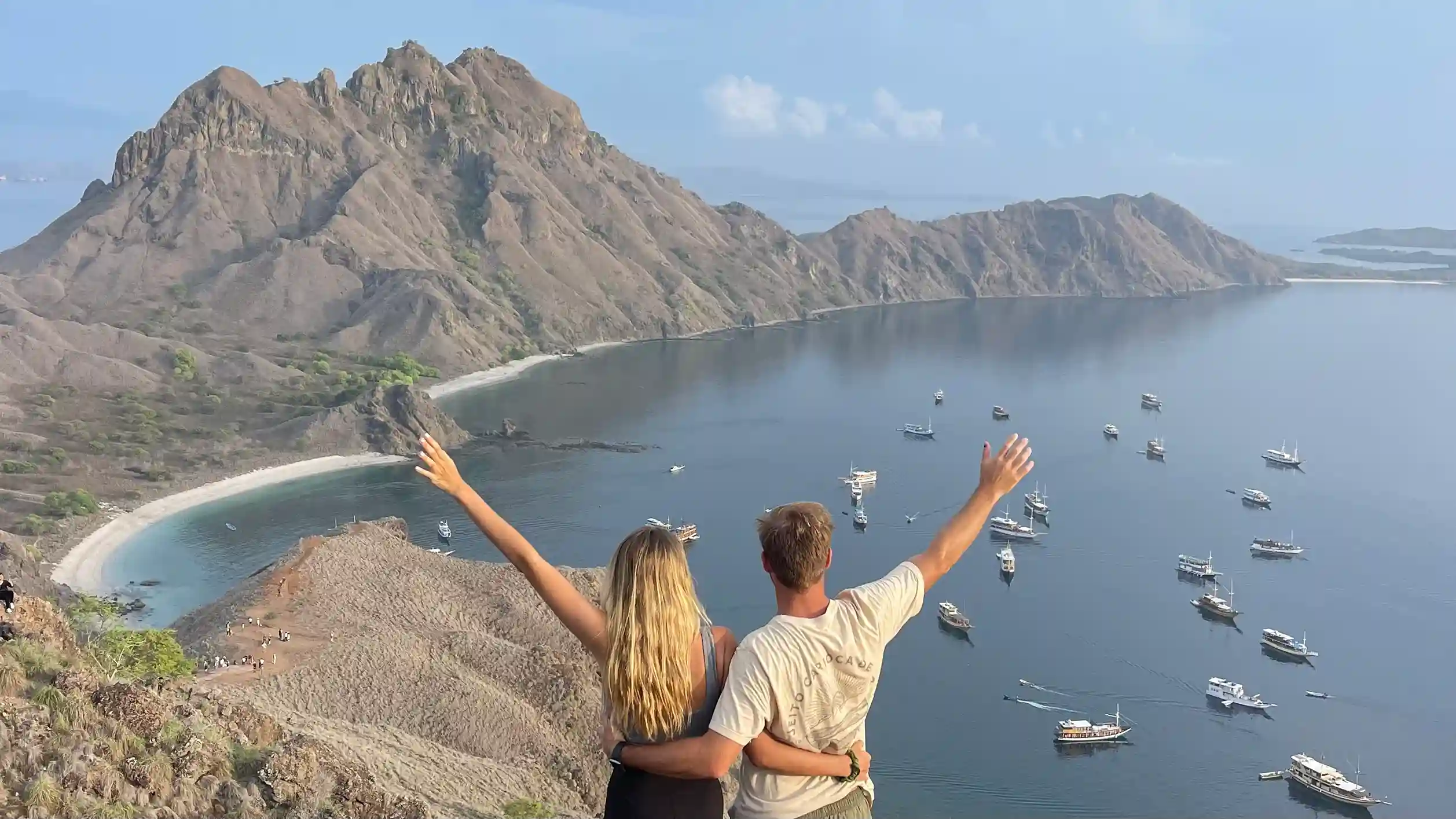
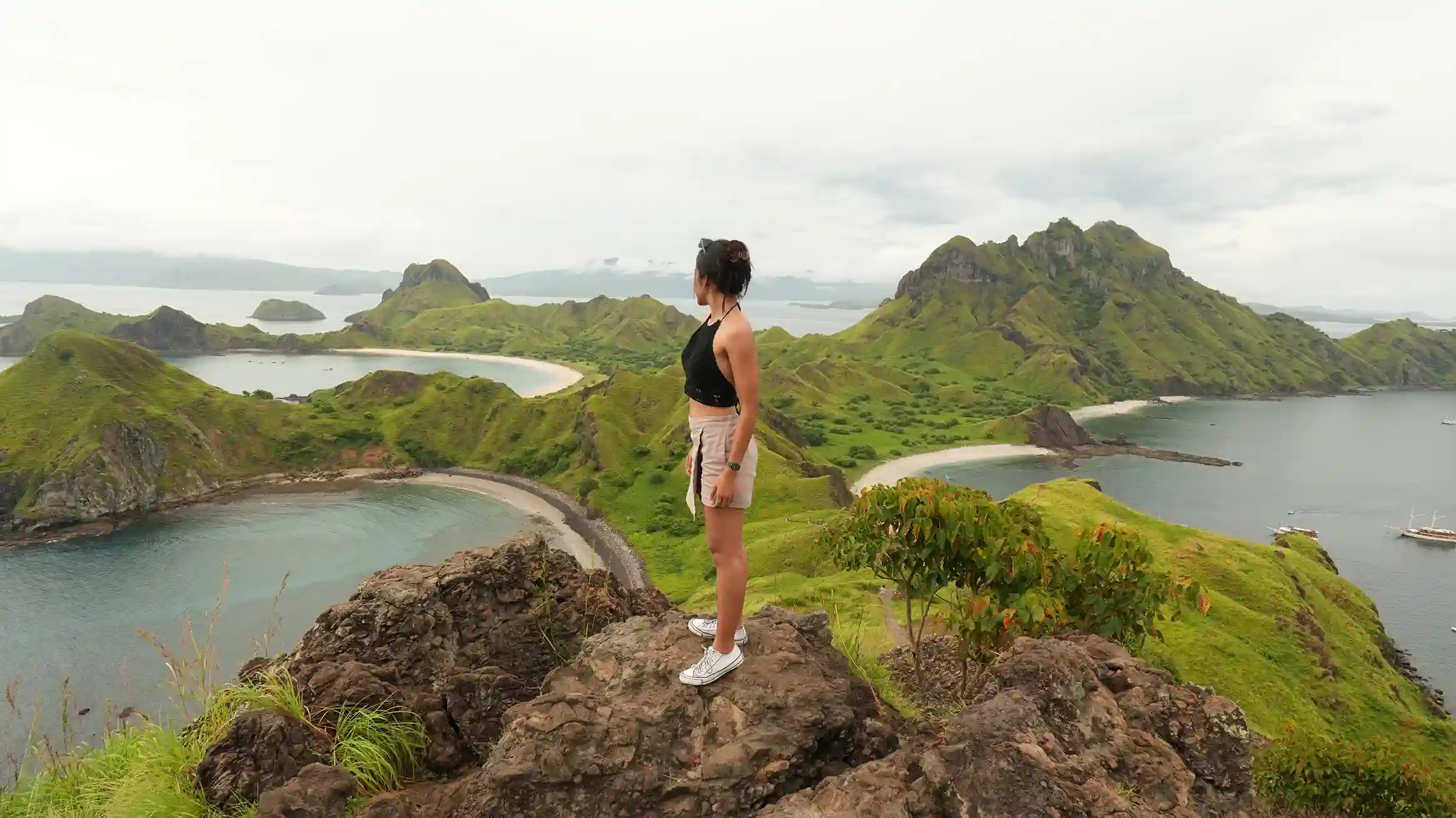
The day’s centerpiece for most travelers: the staircase climb to the three-bay panorama. Budget ninety minutes including the boat maneuvering. Everything about timing this stop is covered in the Padar guide — the short version is that boats arriving before 8am get a different island than boats arriving at 10.
Stop 3: Pink Beach
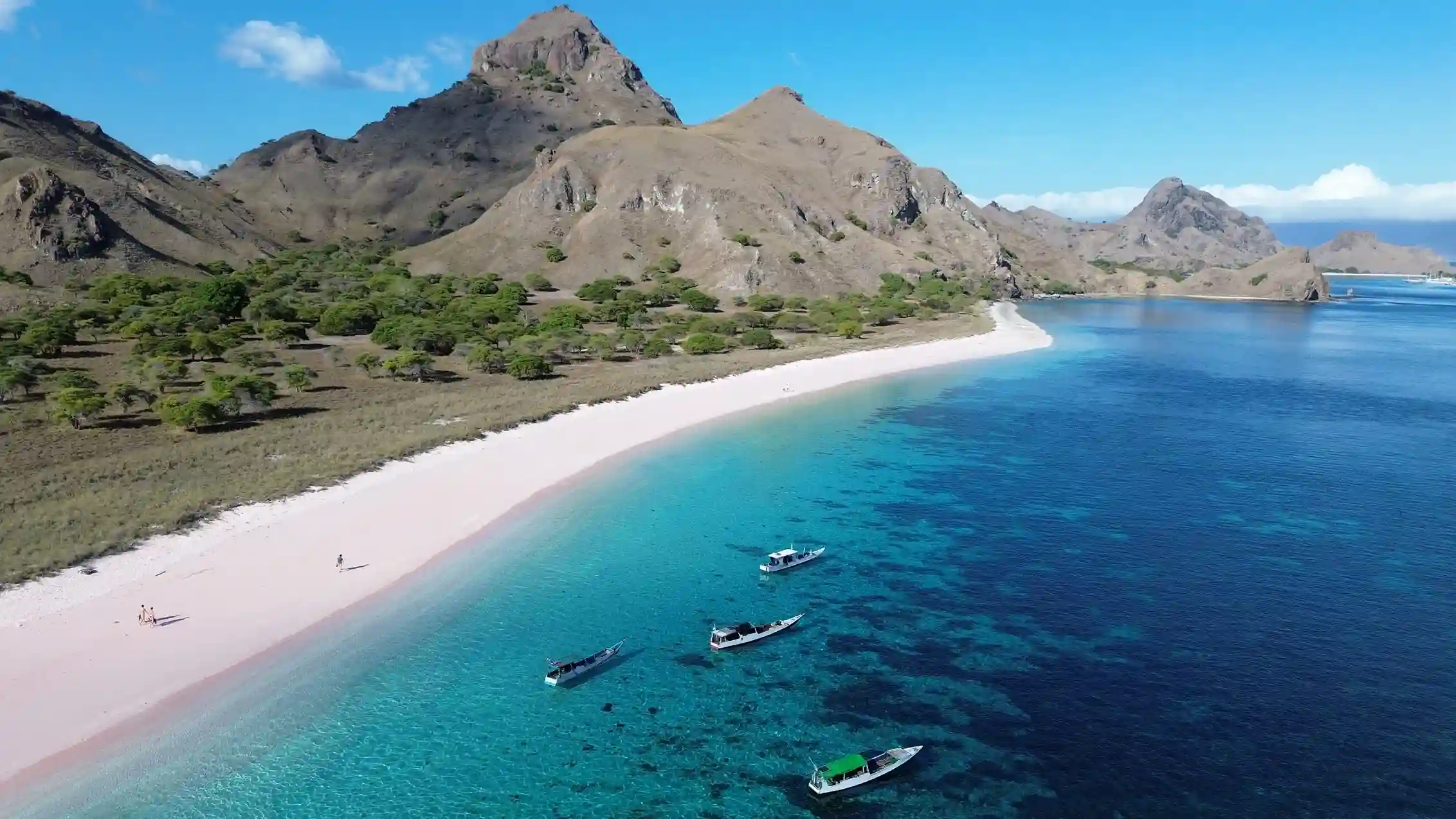
Twenty minutes from Padar’s anchorage. Swim, snorkel the house reef, eat lunch aboard or on the sand depending on the operator. An hour here is standard. The color science and the photography timing are in the Pink Beach guide.
Stop 4: the dragon walk — Loh Liang or Loh Buaya
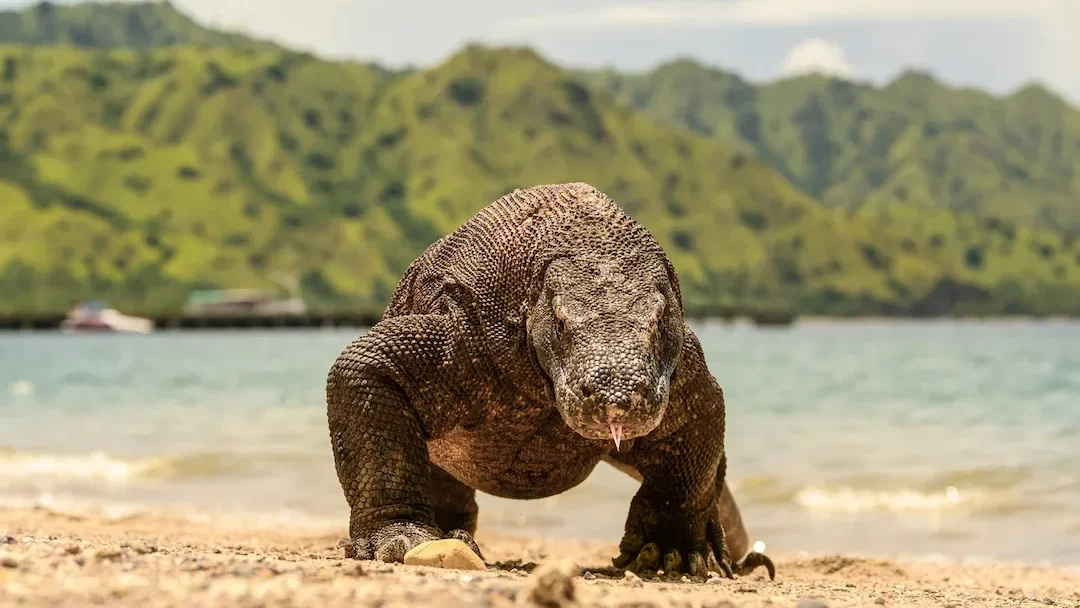
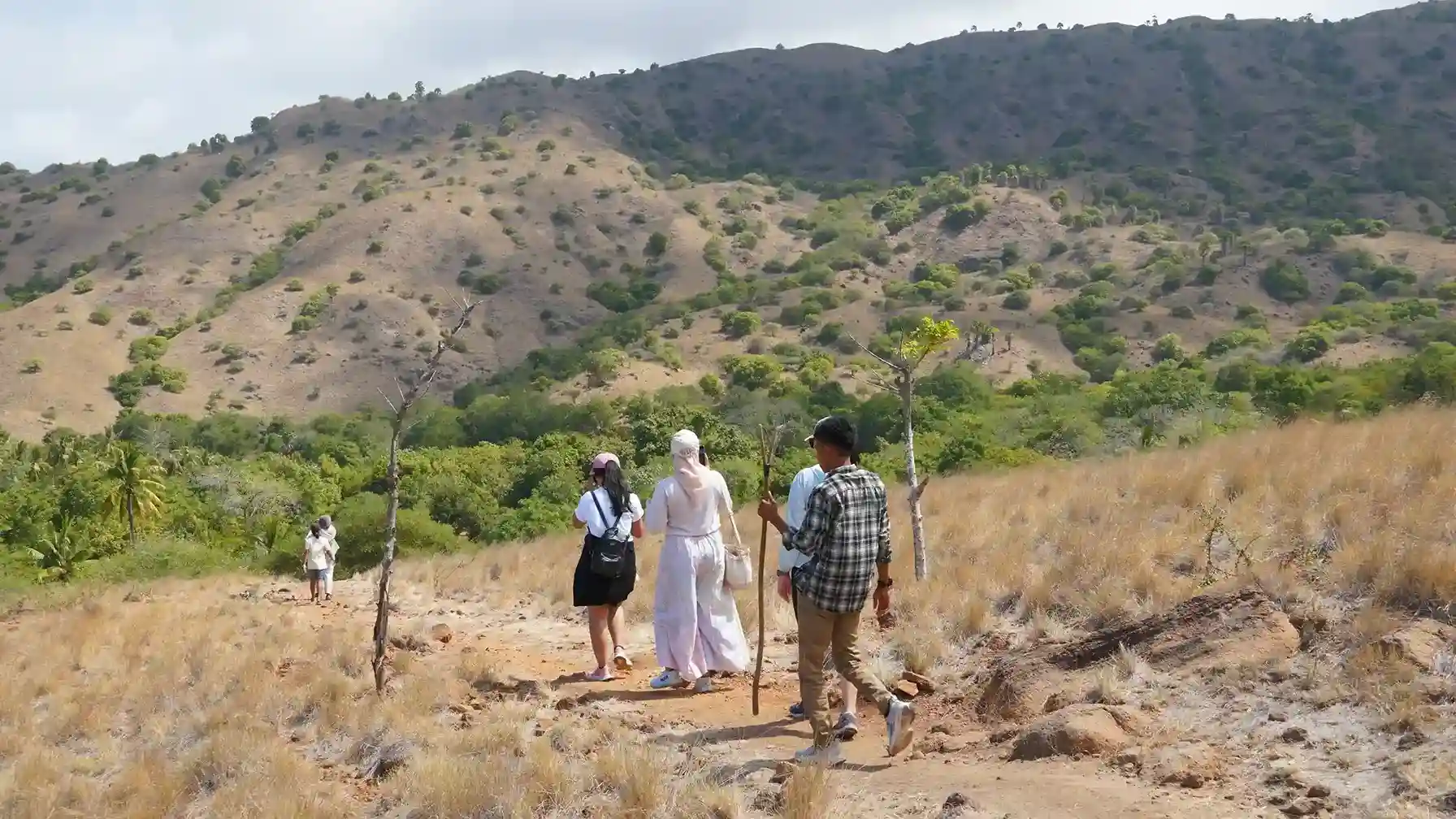
The ranger-escorted walk is the reason the park exists on the map at all. Day trips choose between Loh Liang on Komodo Island and Loh Buaya on Rinca; most default to Komodo. The medium trek takes about an hour through dry forest and savanna, with sightings near-guaranteed around the water sources in dry season. Ranger fees and group rules are itemized in the fees guide. Wear shoes, follow the ranger’s line, and keep the dragons at the distance the staff dictates — they are faster than they look.
Stop 5: Taka Makassar
A comma of white sand barely above the tide, ringed by water in colors that look invented. It is a fifteen-minute photo-and-swim stop, and it is also the staging point for the day’s last big event next door.
Stop 6: Manta Point (Karang Makassar)
A drift over a wide rubble channel where reef manta rays come to be cleaned and to feed. The boat drops snorkelers up-current and collects them down-current; in season — roughly December through February at peak, with sightings year-round — encounters with multiple mantas are routine. The current does the swimming for you, which makes it easier than it sounds, but listen to the crew’s briefing. This site, more than any other, separates good operators from careless ones: good crews count heads obsessively and keep a spotter on the roof.
Stop 7: Kanawa or Sebayur
The wind-down stop on the run home: a final reef swim at Kanawa Island or Sebayur, both just outside the densest part of the park. Late-afternoon light, tired legs, the best coral gardens of the day for many snorkelers. Boats that left harbor late are the ones that cut this stop. Arrival back in Labuan Bajo lands between 5 and 6:30pm.
Shared vs private on this route
A seat on a shared speedboat runs roughly IDR 1.9–2.5 million per person including lunch, gear, and usually the park fees — confirm that last item line by line. A private speedboat charter for the identical route runs IDR 15–25 million for the boat, which breaks even against shared seats at around eight passengers and buys you control of the schedule. That control is worth real money if sunrise at Padar or empty beaches matter to you. The full cost arithmetic lives in the pricing guide, and the day trip vs cruise comparison covers when to abandon the day-trip format altogether.
Honest caveats
This is a long day: twelve hours, much of it in sun and salt. Seas south of Labuan Bajo can chop up in the afternoon, especially January–February, and captains will reorder or drop stops for safety without a refund. Travelers prone to seasickness should medicate before departure, not after the first swell. And the route’s popularity is its weakness in July and August — if you can travel in the shoulder months, every single stop on this loop improves.
Variations you will see quoted
Operators sell the loop under names like “six-spot tour” or “Komodo full day”, and the differences usually come down to three substitutions. Some swap Kelor for Menjerite or skip it entirely in favor of more time at Padar. Some run Rinca’s Loh Buaya station instead of Loh Liang — the trade-offs are covered in the Rinca vs Komodo comparison. And a few add Siaba Bay, a turtle-dense seagrass site, when Manta Point conditions disappoint. None of these variations should change the price much; what changes price legitimately is boat quality, group size, and whether park fees are included.
Questions worth asking before you pay
- What time does the boat actually leave the jetty — not hotel pickup, the jetty?
- Are all park and ranger fees included, itemized in writing?
- How many passengers at full capacity, and how many life jackets aboard?
- Is there shade on deck and a working toilet?
- What is the refund policy if the harbor master closes the port for weather?
That last one matters more than travelers expect. Port closures happen several times a season, concentrated in the January–February monsoon window. Established operators reschedule or refund without drama; the cheapest seats on the dock sometimes evaporate along with the deposit. The safety and trust guide covers how to vet an operator in ten minutes, and the booking guide shows what a clean quote looks like line by line.