Every first-time visitor planning a Komodo escape eventually hits the same fork: the park has two ranger stations where you can walk among the dragons, and most day itineraries only visit one. Operators tend to default to whichever suits their fuel costs and say little else about it. The islands are genuinely different, and the right choice depends on what you want from the hour you will spend on dragon territory.
The case for Rinca (Loh Buaya)
Rinca sits closer to Labuan Bajo — under an hour by speedboat — which is why budget trips and short charters favor it. The Loh Buaya station was rebuilt in recent years around an elevated boardwalk that loops past the ranger camp and out over the valley, with dirt-trail extensions for those who want them.
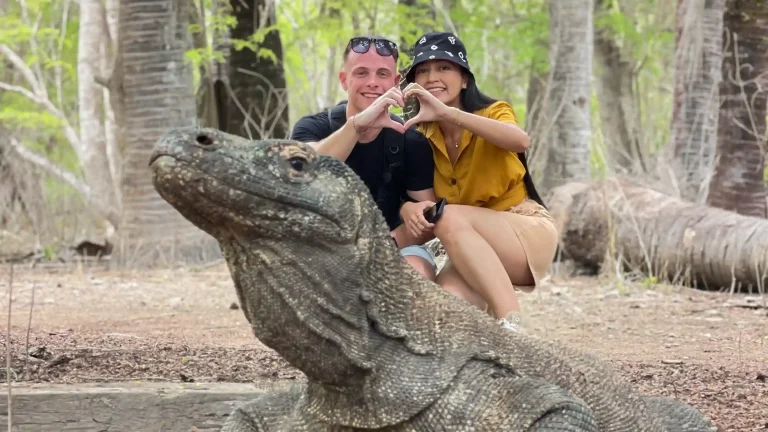
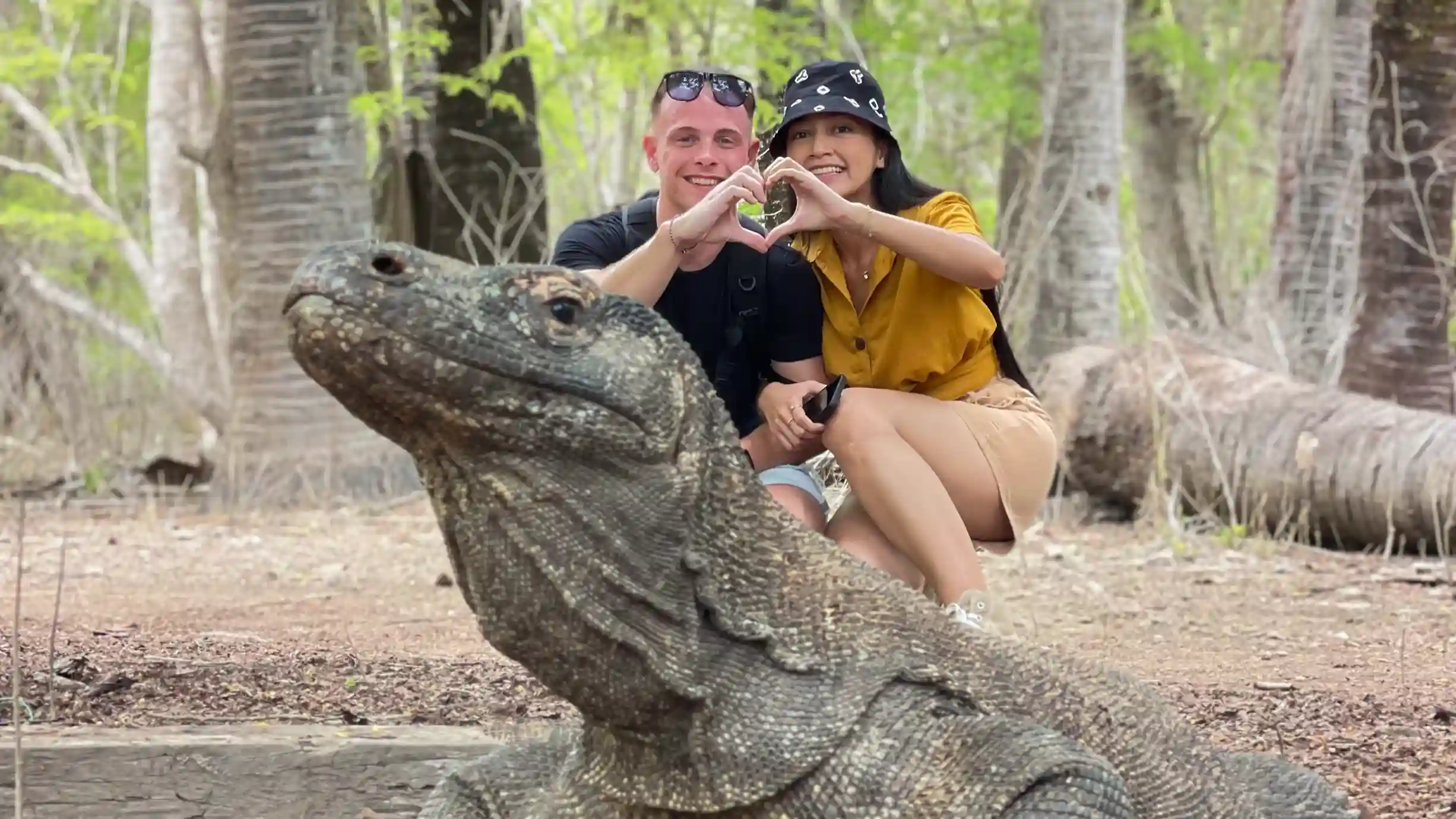
The practical advantage is density. Rinca is smaller than Komodo with a comparable dragon population, and the animals concentrate around the valley near the station. Sightings at Loh Buaya have historically been the most reliable in the park, including big males sprawled near the camp kitchen — a cliché of the trip precisely because it keeps happening. The walk is shorter and flatter than Komodo’s treks, which suits travelers with limited mobility, families with small children, and anyone tight on time.
The cost is atmosphere. The boardwalk makes the encounter feel curated, and on busy mornings the station processes groups with a certain efficiency that thins the wilderness out of the experience.
The case for Komodo (Loh Liang)
Komodo Island is the bigger, wilder option. From the Loh Liang station, ranger-led routes fan out in short, medium, and long versions — the medium trek, about an hour, is the standard choice, crossing dry forest, a water hole that doubles as a dragon magnet in the dry season, and open savanna ridges with views back over the anchorage.
Sightings are marginally less guaranteed than Rinca’s valley cluster, but only marginally; rangers know where the residents spend their mornings. What you gain is the sense of walking through a landscape rather than past an exhibit — deer scattering off the trail, megapode mounds, the scale of the island asserting itself. Loh Liang also sits twenty minutes from Pink Beach, which is why the classic day-trip route pairs them back to back.
The honest answer for a one-day trip
If your Komodo escape gives you a single day in the park, take the standard loop with Loh Liang. The trek is better walking, the pairing with Pink Beach is efficient, and the slightly lower sighting density is a rounding error in practice — rangers at both stations deliver dragons to well over nine in ten visitors in dry season. If anyone in your group has mobility constraints, flip the answer: Rinca’s boardwalk is the accessible version of this experience, and no other factor outweighs that.
With two days, the question dissolves
Overnight itineraries visit both stations without strain — typically Rinca on the first afternoon and Komodo the next morning, or the reverse. Seeing both is quietly instructive: the same animal reads differently in the two settings, and the second encounter is calmer because the novelty has burned off and you start noticing behavior. The 3-day itinerary shows how the double visit slots in around the water stops.
Shared rules, shared fees
Both stations work identically on paper: park entry plus a ranger fee per group, walks only with an escort, groups capped around four to six per ranger. The fees guide has the numbers. The safety briefing is not theater — dragons are ambush predators with a septic, venomous bite, and the rangers’ forked staffs are working tools. Keep the line, keep the distance, and tell your ranger if anyone in the group is menstruating, which the staff ask about because dragons track blood scent over distance.
Season notes
Dry season, April through November, concentrates dragons near water sources at both stations and is peak sighting reliability. In the wet months the animals disperse and sightings get more variable — still likely, less choreographed. Mating season around July–August adds activity and occasional trail closures. February’s nesting period can also restrict routes. None of this should drive your dates by itself; sea state and crowds matter more, and the best-time guide weighs all three.
Whichever island you choose, the hour costs the same and the photographs look similar. The memory differs: Rinca gives you certainty and convenience, Komodo gives you a walk you will actually describe to people. Choose accordingly, or take the two-day route and stop choosing.
What the photographs will not tell you
Dragon encounters at both stations are quieter than the camera suggests. The animals spend most daylight hours conserving energy — long, still, prehistoric shapes in the shade — and the drama is in the details a ranger points out: the flicking forked tongue reading the air, the drag marks of a tail crossing the trail, the speed with which a “sleeping” dragon repositions when a deer wanders close. Visitors who arrive expecting a wildlife chase leave underwhelmed; visitors who treat it as an hour inside the territory of the largest lizard on earth, with a guide who has read these specific animals for years, tend to call it the best hour of the trip. Ask your ranger questions. The walk improves immediately, on either island, and the stories — which dragon raided the camp kitchen, which one swam to a neighboring island — are not in any guidebook. Then get back on the boat, because the water half of the day is waiting.
One last logistics note: whichever station you pick, schedule the walk for the morning block of your day. Dragons are most active in the cooler hours, the light is kinder for photographs, and the afternoon heat on the open savanna sections is no small thing in October. Boats that run the dragon walk after lunch are sequencing the day around fuel economy, not around you — a detail worth checking before you pay, alongside the other questions in the booking guide.
Planning specifics? See see current rates or booking details.
Keep Reading
Places
Labuan Bajo Travel Guide: Gateway Town for Komodo Escapes and Flores Adventures
Labuan Bajo is worth staying in before a Komodo tour for its unique blend of local culture, stunning views, and…
Places
Komodo Escape Photography Guide: Best Viewpoints, Drone Rules and Sunset Spots
The Komodo Escape Photography Guide provides essential tips for capturing the natural beauty of Komodo National Park, including the best…
Places
Extend Your Komodo Escape: Flores Island Highlights, Kelimutu and Local Villages
Yes, you can combine a Komodo escape with a Flores overland tour. By extending your itinerary, you can explore the…